12-Week Competitive Exam Study Plan: A Practical Roadmap to Get Exam-Ready
"Follow a practical 12-week competitive exam study plan covering foundation building, question practice, speed, mock tests, revision, and final preparation. Learn how to structure your time for SSC, banking, railway, and other competitive exams."
pooja
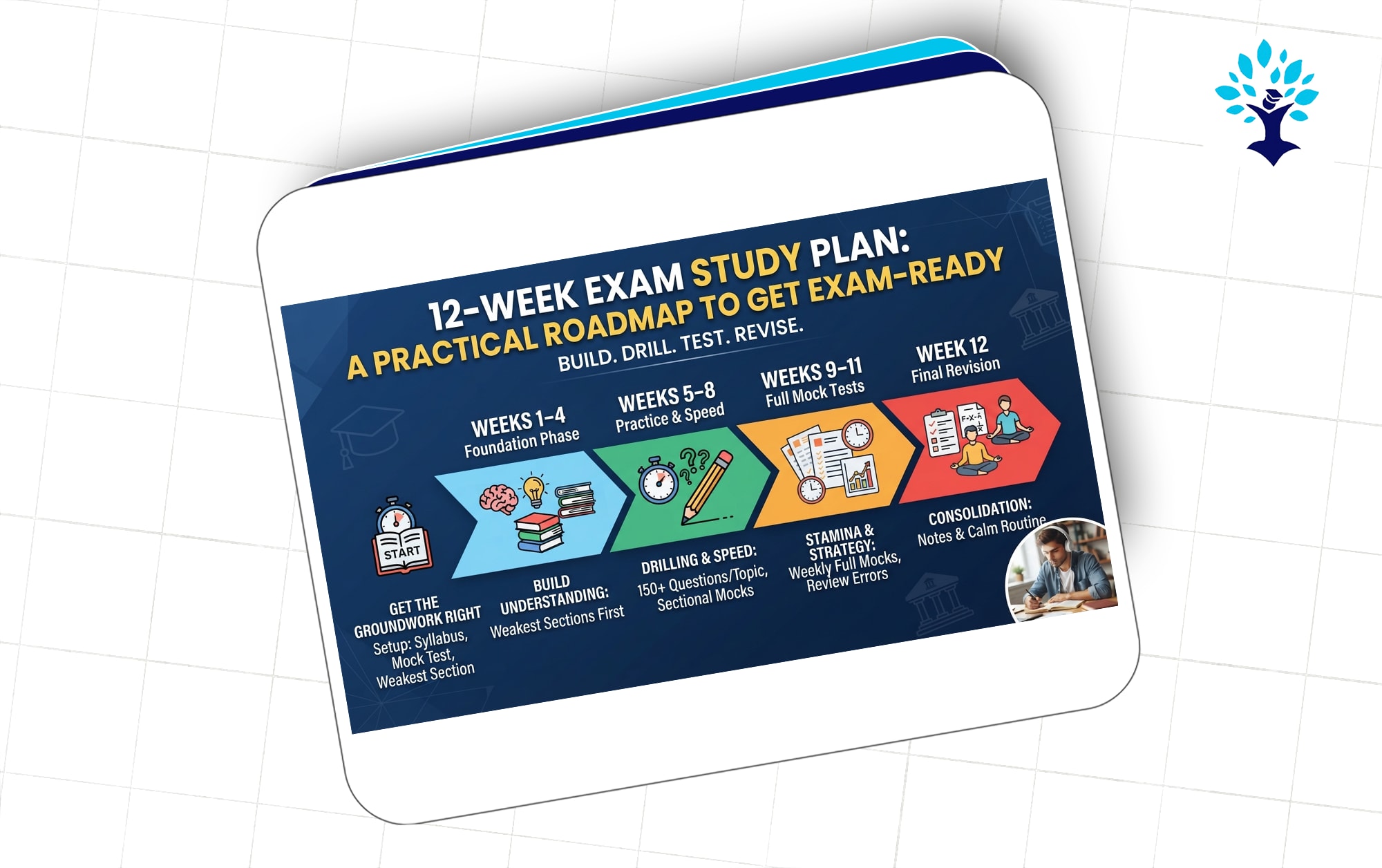
12-Week Competitive Exam Study Plan
Most competitive exam study plans fail for the same boring reason — they're built around how much time is left, not around how learning actually works. Someone finds out their exam is three months away, panics, and draws up a timetable cramming twelve subjects into twelve weeks with no room for the fact that week four always goes worse than week one. Then week two hits, real life interferes, the plan falls apart, and guilt takes over from there.
A study plan that works has to expect the mess. It needs phases, not just a subject list — time to build understanding before you're tested on speed, and enough repetition built in that one bad week doesn't undo a month of work. This is a 12-week structure that applies whether you're prepping for SSC, banking, railway exams, or anything with a similar pattern of prelims, mains, and heavy competition. Adjust the exact subjects to whatever you're targeting, but keep the phase structure — it's the part that actually matters.
Before Week One: Get the Groundwork Right
Skipping this step is the single most common reason study plans collapse by week three. Before you touch a single topic, spend two or three days on setup:
Download the official syllabus and previous three years of question papers for your target exam
Take one full-length mock test cold, with no preparation, just to see where you're starting from
Mark your weakest section without flattering yourself — not the one you assume is weak, the one your mock shows
Block out your real available study hours per day, including commute time, rather than an idealised number you won't hit
That mock test matters more than it sounds like it should. Most aspirants build their plan around the subject they enjoy studying, when the plan should really be built around the subject dragging their score down.
Weeks 1–4: Foundation Phase
The first month is about building understanding, not speed. Trying to solve questions fast before you actually understand the concept is how people plateau at a mediocre score and can't figure out why.
Weeks 1–2: Cover the basics of your weakest two sections first — this is where most people ignore their own diagnostic and start with what feels comfortable instead
Weeks 3–4: Move into your stronger sections while doing light daily revision of weeks 1–2, so nothing goes cold before you circle back
Through all four weeks, build two habits that need to become automatic before Week 5:
A daily current affairs habit — fifteen to twenty minutes, every single day, not saved up for the weekend
Short daily notes for anything you'll need to memorise later, rather than trying to re-read entire chapters closer to the exam
By the end of Week 4, you shouldn't expect speed yet. You should expect clarity — the sense that you understand why an answer is correct, not just that you eventually landed on it.
Weeks 5–8: Practice and Speed-Building
This is where the plan shifts from learning to drilling. Understanding a concept and being able to apply it in ninety seconds under exam pressure are two completely different skills, and this phase exists to close that gap.
Solve a minimum of 150–200 questions per topic before moving to the next one — attempting only 30 or 40 questions per topic is the most common reason candidates freeze up on unfamiliar variations during the real exam
Start solving previous-year question papers from Week 5 onward, not after you've "finished" the syllabus — most aspirants never feel fully finished, and PYQs teach you the exam's actual pattern better than any textbook
Introduce sectional mock tests once a week, timed strictly, to start training your speed under real conditions
Keep the daily current affairs and revision habits running in the background — this phase is where they're most likely to slip, and that's exactly when they matter most
By Week 8, you should be noticeably faster than you were in Week 4, even if accuracy still needs work. Speed comes before precision in most study plans, and that's fine — precision is what the next phase is for.
Weeks 9–11: Full Mock Test Phase
Sectional practice builds skill. Full mocks build stamina, timing strategy, and the ability to make quick decisions about which questions to skip — a skill that quietly decides a huge share of final scores and gets almost no attention in most study plans.
One full-length mock test per week, taken at the same time of day your actual exam is likely to be held
Spend at least as much time reviewing each mock as you spent taking it — going through every wrong answer and understanding the mistake pattern, not just the correct answer
Track recurring error types across mocks rather than treating each one as a standalone event; the same three or four mistakes usually show up again and again until you address them directly
Start experimenting with attempt strategy — which sections to start with, how long to spend before skipping a stuck question, when to guess and when to leave a question blank
This is also the phase where most people's confidence dips, because full mocks expose weaknesses that sectional practice hides. That dip is normal. It's not a sign the plan isn't working — it's a sign you're finally testing under conditions close to the real thing.
Week 12: Final Revision and Taper
The last week isn't for learning anything new. Trying to cram a new topic seven days out almost always does more harm than good, because it eats into revision time and adds fresh material you haven't drilled under pressure.
Revisit your notes and formula sheets rather than new content — this is pure consolidation
Take one, at most two, lighter mock tests early in the week, then stop full-length mocks two to three days before the exam
Sleep on a consistent schedule matching your exam-day timing, so your body isn't adjusting to an unfamiliar routine on the day itself
Re-read your list of recurring mistakes from the mock phase one final time — it's the fastest possible revision, because it's built entirely from your own error patterns. Once the exam is over, the next challenge is often the interview, so preparing for the top interview questions in 2026 can help you walk into that stage with more confidence.
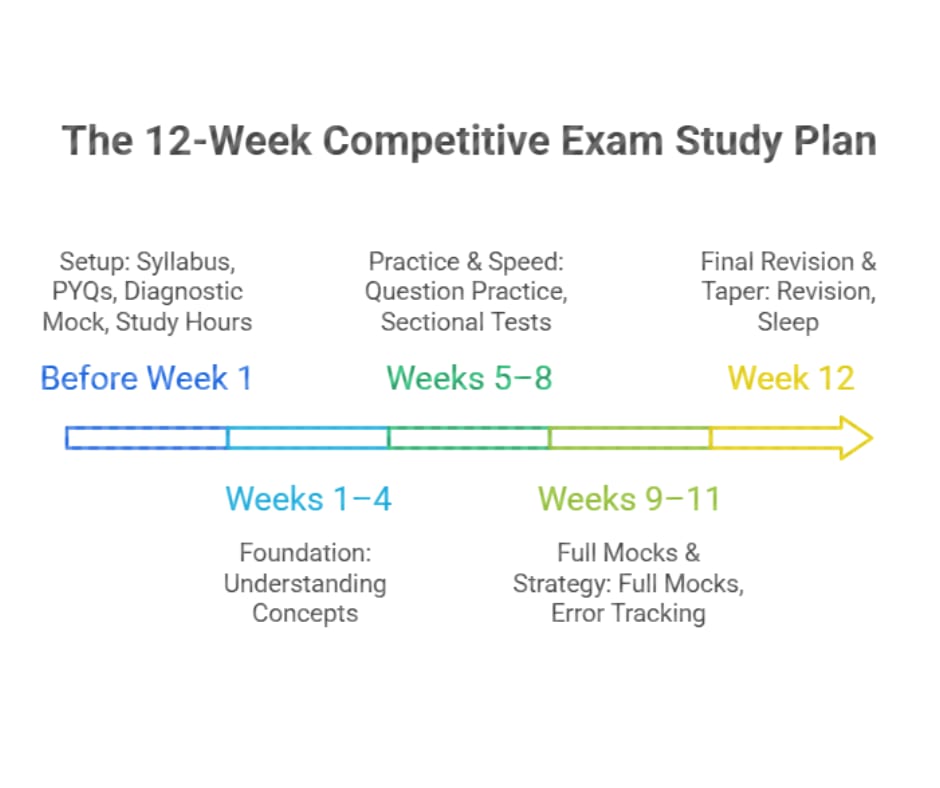
A Few Adjustments Worth Making
This 12-week frame holds up well as a general structure, but a few things shift depending on your exam and starting point:
If you're starting from a genuinely weak base rather than a rusty one, stretch the foundation phase to five or six weeks rather than compressing your practice phase to compensate
For banking exams specifically, weight your speed-building phase more heavily — the sectional timers reward drilling speed earlier than SSC or railway exams typically require
If you're preparing for more than one exam with overlapping syllabus (SSC CGL and CHSL, or IBPS PO and SBI PO), the foundation and practice phases can run in parallel; only the final mock phase really needs to split by exam If you're applying for jobs alongside your exam preparation, having a professional resume ready can make the process easier, and these free resume templates can give you a clean starting point.
Final Thought
A study plan only works if it survives contact with an actual bad week, and most timetables aren't built with that in mind. The twelve-week structure here isn't about squeezing in more hours than the next person — it's about sequencing effort the way the exam actually rewards it: understanding first, speed second, stamina and strategy last, with revision built in throughout rather than crammed into the final days. If you fall behind schedule somewhere in the middle, and most people do, don't scrap the plan and start improvising. Shift the phase boundaries by a week or two and keep the order intact rather than skipping straight to mock tests out of panic. The candidates who consistently clear these exams aren't the ones who never lost a week to illness, a bad mock score, or plain exhaustion — they're the ones who had a structure solid enough to absorb that loss without falling apart completely. Once that preparation turns into a job opportunity, knowing how to write a resume that still gets you hired becomes the next important step. Build the plan once, trust the phases, and let consistency do the work that panic-driven cramming never actually manages to do.
Related Articles
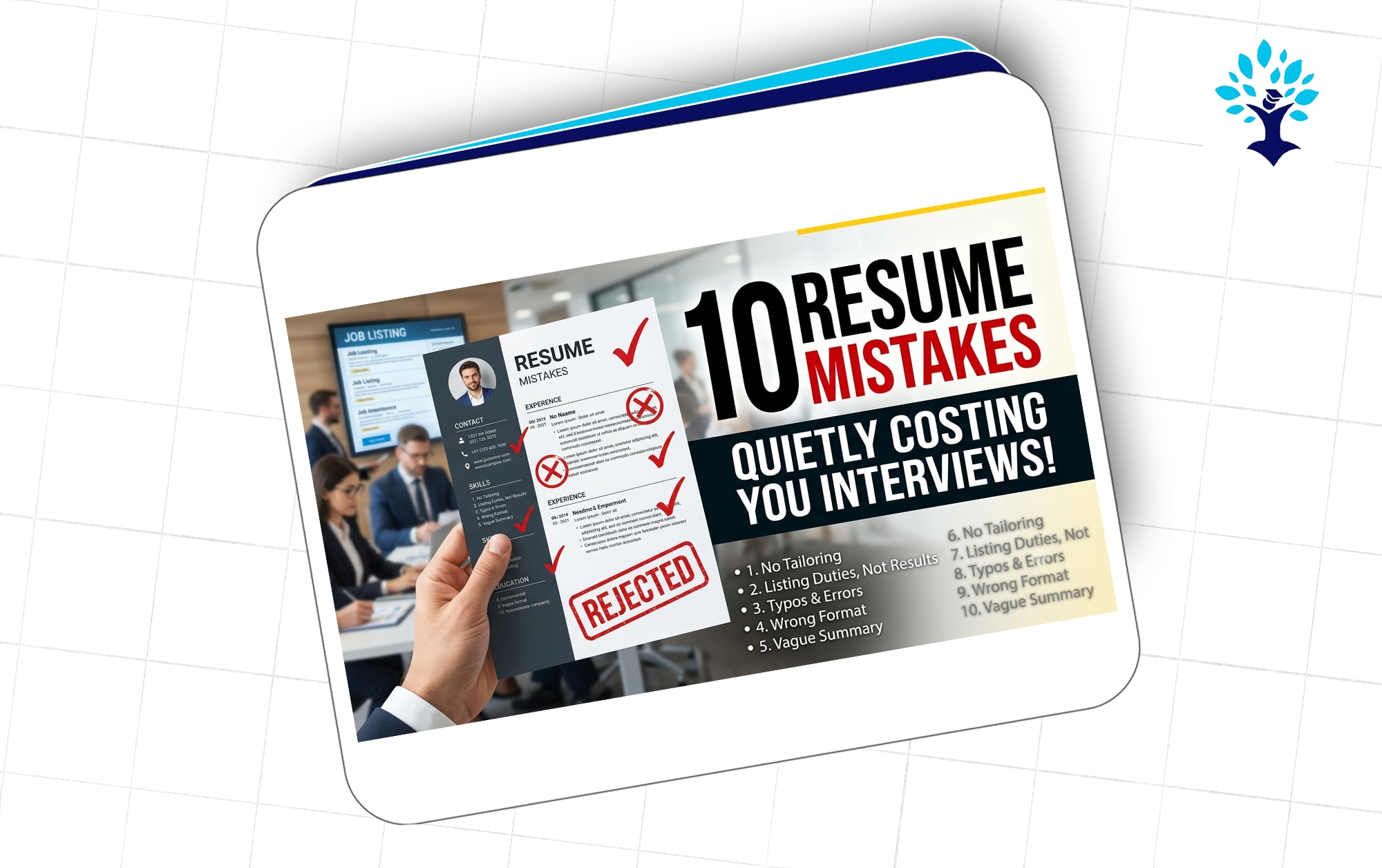
10 Resume Mistakes That Are Quietly Costing You Every Interview
"Discover the 10 common resume mistakes that silently cost candidates interviews. Learn how to improve your resume, stand out to recruiters, and increase your chances of landing more job opportunities."
6 min read

Your LinkedIn Profile Is Working a Night Shift — Make Sure It's Actually Good at the Job
"Recruiters spend just seconds reviewing LinkedIn profiles. Learn how to Optimize your photo, headline, About section, skills, and experience to increase profile views, recruiter interest, and job opportunities."
6 min read

Should You Let AI Write Your Resume? Here's the Honest Answer Nobody's Giving You
"Everyone's using AI to write resumes—but should you? Here's the honest truth about what AI gets right, where it backfires, and how to create a resume that impresses both ATS systems and human recruiters."
7 min read