Job vs Business After College: What Should You Actually Choose in 2026?
"Job or business after college in 2026? Compare income, risk, career growth, learning, financial stability, and entrepreneurship to decide which path fits your goals, skills, risk tolerance, and current situation."
pooja
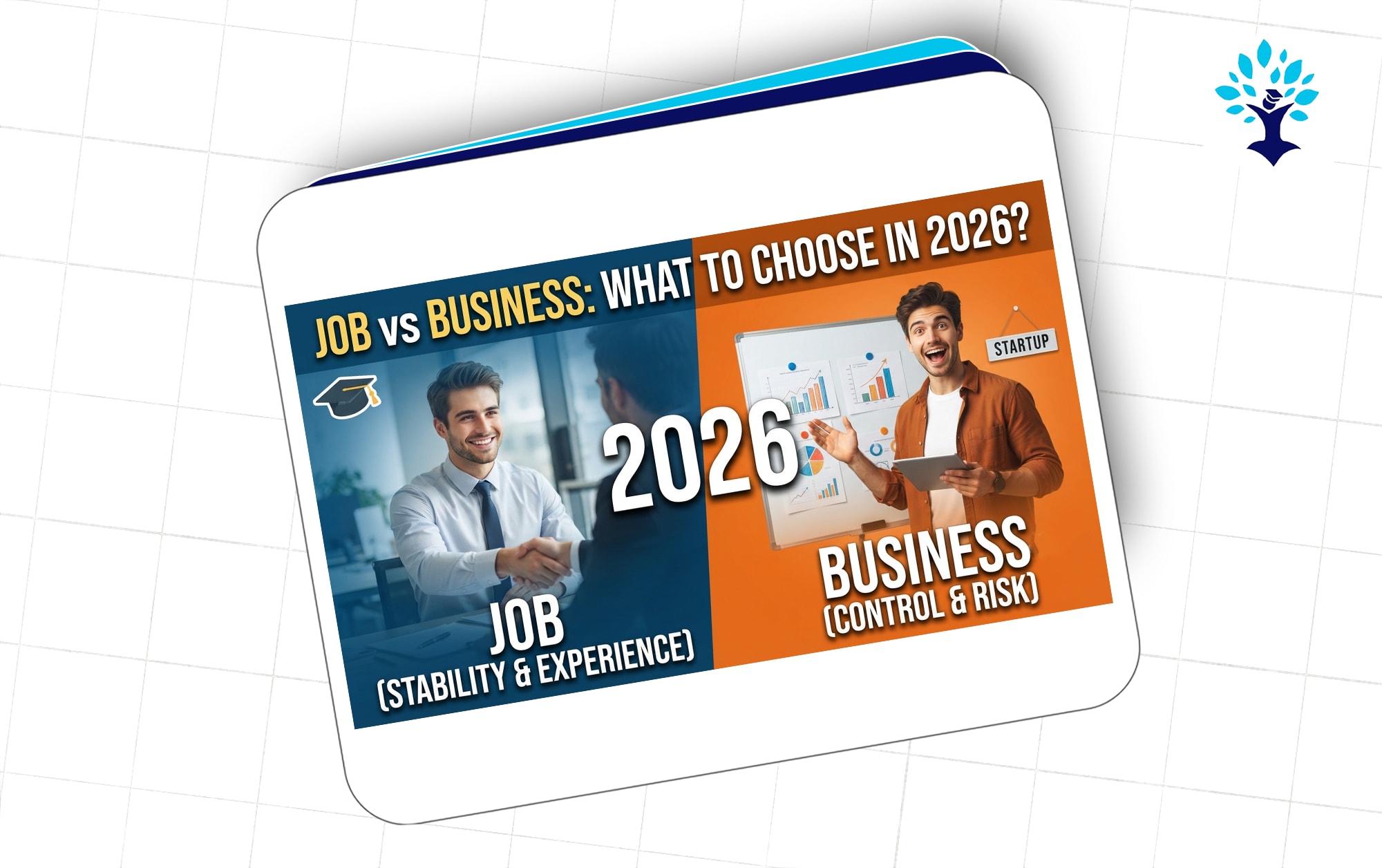
What Should You Actually Choose in 2026?
There's this question that hits almost every final-year student at some point, usually late at night when you're overthinking your entire future — "Should I get a job, or should I just start something of my own?" Some people have a clear answer immediately. Most don't. And honestly, that confusion makes complete sense, because this isn't really a small decision. It affects your income, your risk appetite, your family's expectations, and sometimes even your sleep schedule for the next few years.
There's no universally "right" answer here, no matter what your topper cousin or that one LinkedIn post about "why I quit my 9-to-5" tells you. What actually helps is understanding both paths honestly — the real pros, the real struggles, and the kind of person each path usually suits — so you can make a decision that's based on your own situation, not someone else's success story.
Why This Decision Feels So Heavy
Part of the reason this question feels so overwhelming is that both options come loaded with assumptions. A job feels "safe" but sometimes gets labelled boring. A business feels "exciting" but comes with a scary word attached to it — risk. Neither of these labels is entirely true, and neither is entirely false either.
The honest answer is that both paths can work brilliantly, and both can go badly, depending on how prepared you are, how much support you have, and how well the choice actually fits your personality. So instead of asking "which one is better," a more useful question is "which one fits me better, right now."
The Case for Getting a Job First
Let's start with the option most students end up choosing, and for fairly practical reasons. A job gives you something a business usually can't in the beginning — a steady paycheck. That might sound obvious, but when you're paying rent, helping out at home, or just trying to build some savings, that monthly stability matters a lot more than people admit. There's also the learning curve to consider. Working under experienced people, understanding how real companies function, learning how to handle deadlines, clients, or office politics — this kind of practical exposure is genuinely hard to get anywhere else, and it often ends up shaping how well you'd run a business later, if that's still something you want to do.
A job also comes with a support system that's easy to underestimate — mentors who've already made the mistakes you're about to make, colleagues who can vouch for you later, and a professional network that builds up slowly but becomes seriously valuable over time. As your experience grows, knowing how to communicate your value and talk your way up can become just as important as the skills you bring to the workplace. And there's a career-growth angle too. Promotions, appraisals, switching companies for better roles — these all add structure to your growth, something that's a lot harder to measure when you're building something entirely on your own.
Here's a quick look at what makes a job the more practical choice for a lot of graduates:
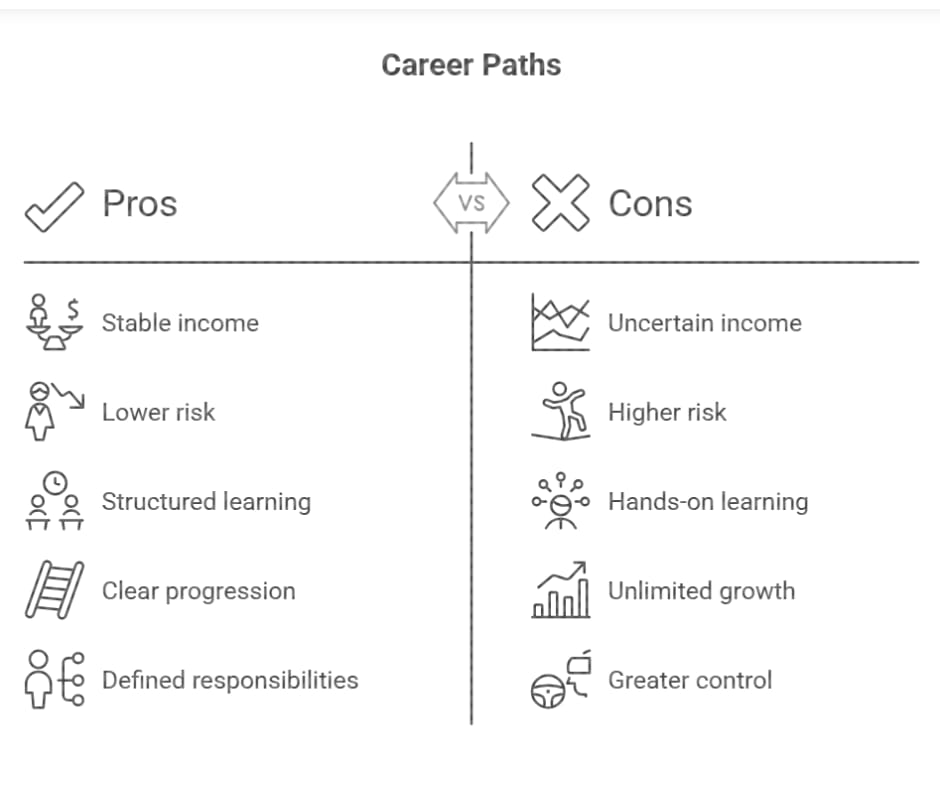
Predictable monthly income, which makes financial planning easier
Lower personal financial risk compared to starting something from scratch
Structured learning through mentors, managers, and real workplace experience
Access to industry contacts and a professional network that grows over time
Clear paths for growth through promotions, appraisals, and skill development
Easier access to loans, credit cards, and financial products with a stable salary slip
For most fresh graduates, especially if you don't have a financial cushion to fall back on, a job is genuinely the smarter starting point. It's not the "less ambitious" choice — it's often the more strategic one.
The Case for Starting a Business Right After College
Now, the other side of this. Starting a business straight after college isn't a reckless move either, especially if you go in with the right expectations and a clear plan. The biggest advantage here is control. You decide what you're building, how you build it, and what direction it takes — nobody's approving your ideas through three layers of management. If you genuinely have a strong idea, some early traction, or a skill that clearly has market demand, starting early gives you an edge most people don't have — time. You're not juggling a home loan, a family to support, or a decade of financial commitments yet, which means the "risk" of starting young is often lower than people assume, not higher.
There's also something to be said about the kind of learning entrepreneurship forces on you. You end up understanding sales, marketing, finance, and people management all at once, simply because there's no one else to hand these tasks to in the beginning. That kind of forced, hands-on learning tends to build a level of resilience and resourcefulness that a regular job rarely demands this early on.
That said, this path isn't for everyone, and it's worth being honest about what it actually looks like at the start.
Income is unpredictable, and in many cases, there isn't any for the first several months
You're responsible for every part of the business, from strategy to execution to fixing mistakes
Failure rates for early-stage startups are genuinely high, and that's just the reality of it
You need either personal savings or external funding to survive the early phase
There's no built-in mentorship, so you're often learning by making costly mistakes
The mental pressure of uncertainty can be a lot heavier than people expect
If you're someone who genuinely enjoys solving problems, doesn't panic easily when things go wrong, and has some kind of financial backup — even a small one — starting a business straight out of college can absolutely work. It's just important to go in with your eyes open, not just motivation.
What About a Middle Path?
A lot of people assume it's strictly one or the other, but that's not entirely true anymore. Plenty of graduates today take up a job first, purely to build savings, gain experience, and understand how industries actually function, while working on a business idea quietly on the side. Once that side project starts showing real traction, or once there's enough saved up to leap safely, they move into it full-time.
This hybrid approach isn't a compromise or a "safe person's excuse" — it's often the smartest way to reduce risk without giving up ambition. You get the stability of a paycheck while still building something of your own at a pace that doesn't put your entire financial life at risk.
Questions Worth Asking Yourself Before Deciding
Before jumping into either path, it genuinely helps to sit with a few honest questions instead of just going with your gut reaction. Do you have any financial backup to survive a few months without steady income, or would even a short gap put real pressure on your family? You should also think about where you want that career to take you geographically, because working overseas isn't a fantasy if you build the right skills and experience first. Do you have a business idea that's actually validated in some way, or is it still just an idea you're excited about? How well do you handle uncertainty and rejection, because both come up a lot more in entrepreneurship than in a regular job? And are you choosing this path because it genuinely excites you, or because you're trying to avoid the "boring 9-to-5" label that social media has attached to jobs lately?
There's no wrong answer to any of these, but being honest with yourself here saves a lot of stress later.
Final Thoughts
At the end of the day, choosing between a job and a business isn't about which one sounds more impressive on paper. It's about which one actually fits your financial situation, your risk tolerance, and the kind of person you are right now — not the person you're hoping to become someday. A job can absolutely be the first step toward building something bigger later, and a business started early can absolutely turn into a stable, thriving career if you go in prepared. Neither path guarantees success, and neither path guarantees failure either. And as hiring changes, it's worth remembering that AI is now running your interview in some recruitment processes, making preparation and adaptability increasingly important.
If you're currently exploring job opportunities while you figure this out, or you're keeping an eye on openings while you build something on the side, keep checking back for the latest job updates, fresher openings, and career guidance designed to help you make this decision with a lot more clarity than most people get.
Related Articles
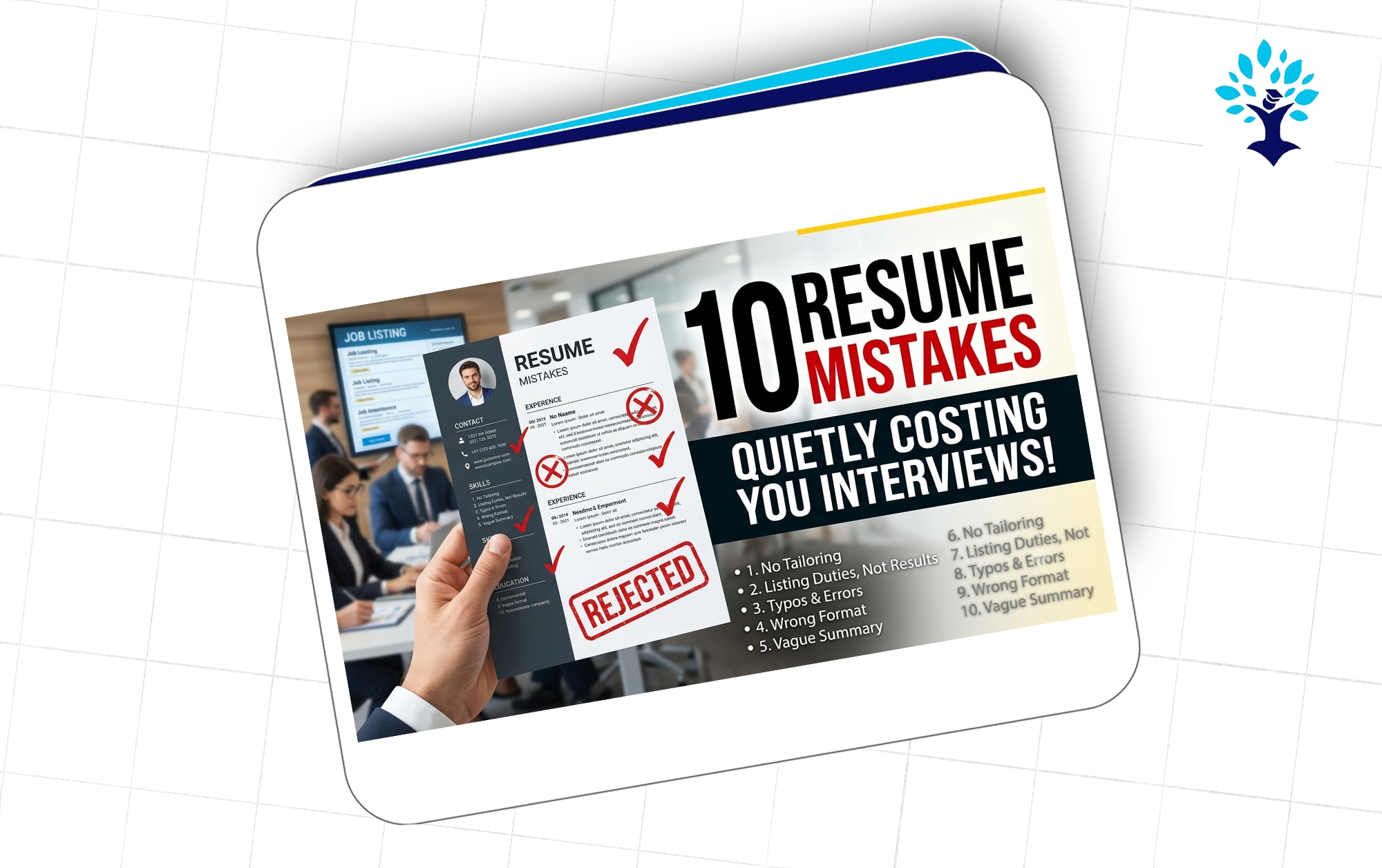
10 Resume Mistakes That Are Quietly Costing You Every Interview
"Discover the 10 common resume mistakes that silently cost candidates interviews. Learn how to improve your resume, stand out to recruiters, and increase your chances of landing more job opportunities."
6 min read
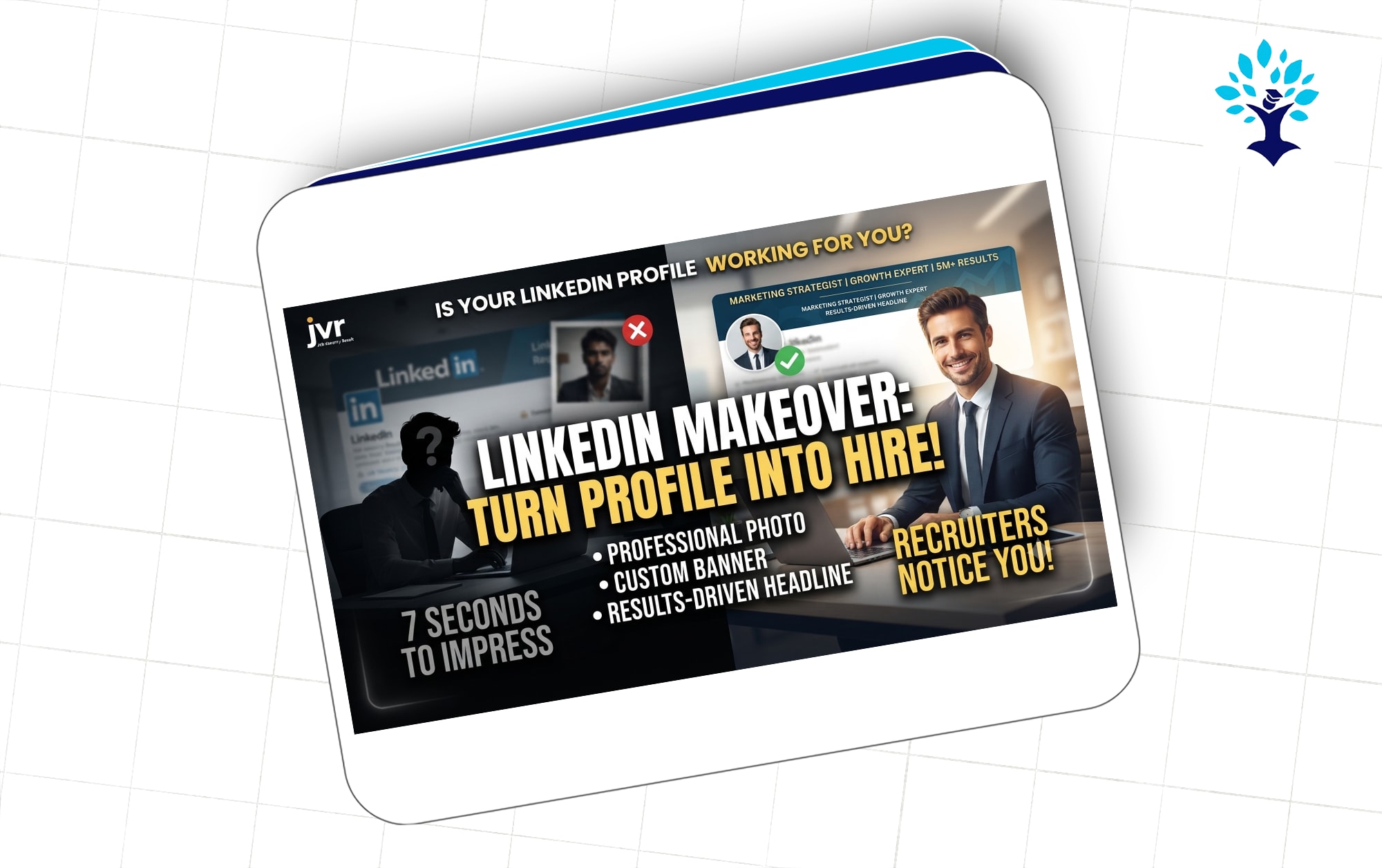
Your LinkedIn Profile Is Working a Night Shift — Make Sure It's Actually Good at the Job
"Recruiters spend just seconds reviewing LinkedIn profiles. Learn how to Optimize your photo, headline, About section, skills, and experience to increase profile views, recruiter interest, and job opportunities."
6 min read
Should You Let AI Write Your Resume? Here's the Honest Answer Nobody's Giving You
"Everyone's using AI to write resumes—but should you? Here's the honest truth about what AI gets right, where it backfires, and how to create a resume that impresses both ATS systems and human recruiters."
7 min read